Illuminate Your Path: The Benefits of Outdoor Step Lights
Planning outdoor step lighting: where fixtures go, recessed versus surface-mounted options, low-voltage and solar power, warm colour choices and simple upkeep.
- Runtime
- 2 min
- Published
- June 27, 2024
- Channel
- Household
In this piece
- Safety comes first
- Planning the layout
- Power and light quality
- Looks, value and upkeep
An outdoor staircase that feels perfectly safe at noon can turn into a guessing game after dark, especially with arms full of shopping or a sleepy child. Step lights solve that problem at the exact spot where feet need guidance, and they do it without the glare of a single floodlight blasting across the garden. Done well, they also give a deck or terrace a calm, finished look in the evening.
Safety comes first
The main purpose of step lighting is simple: make every tread and its edge visible. When the front of each step is lit, the eye reads depth more easily and missteps become less likely. That matters for older relatives, young children and guests who do not know the layout. Lighting the top and bottom of a flight is especially helpful, because those transitions are where people tend to misjudge the first or last step.
Planning the layout
Before buying fixtures, sketch the steps and note where light is actually needed.
| Location | Typical approach |
|---|---|
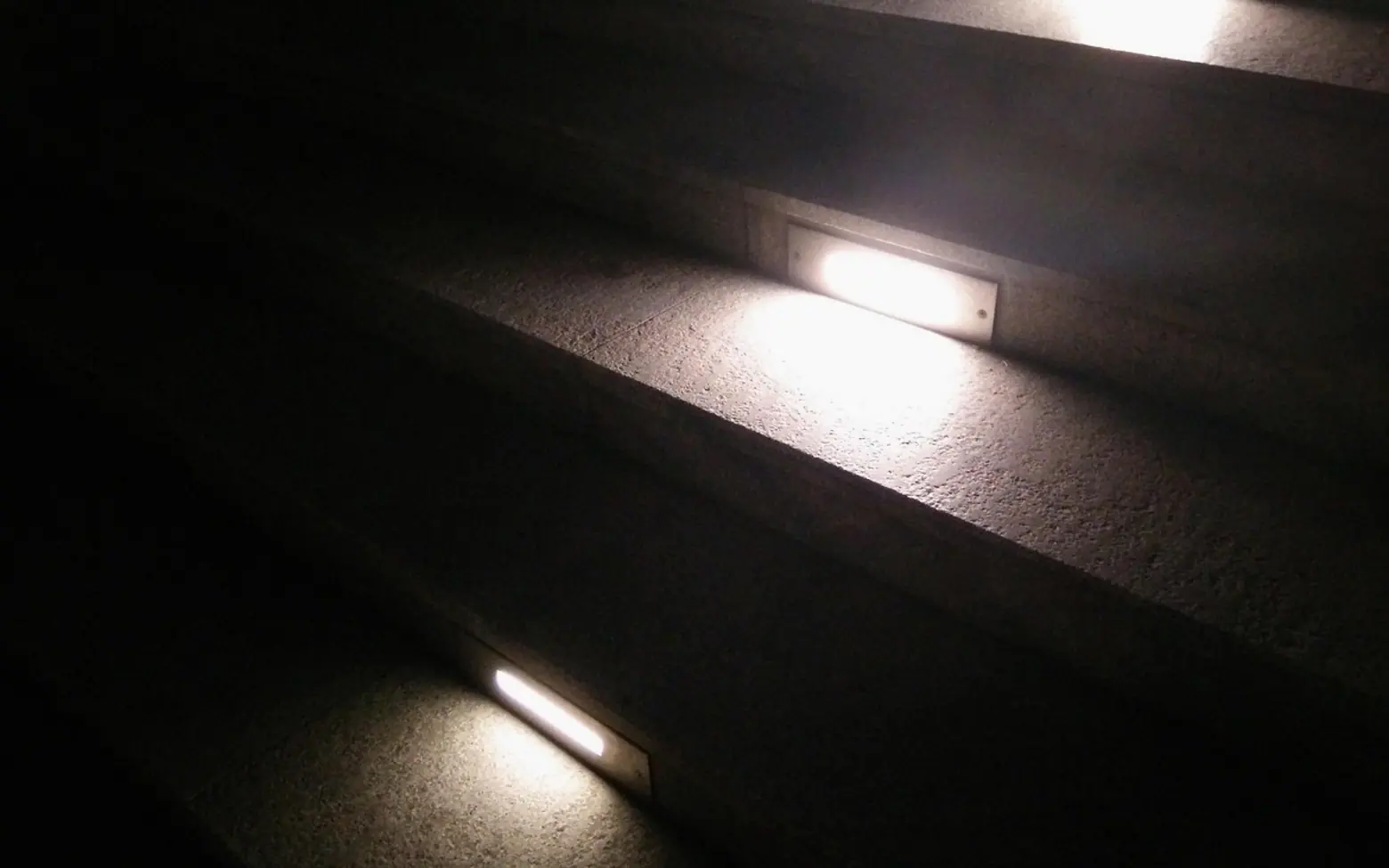
| Riser of each step | Small recessed fixtures that wash light down onto the tread below |
| Side walls or stringers | Low lights every few steps, angled across the treads |
| Deck stairs | Compact deck lights fitted into risers or posts |
| Top and bottom landings | A slightly brighter fixture to mark the change in level |
Ranges of step lights made for decks and stairs make this kind of plan easier to carry out, as they are designed to sit flush in risers and posts and give an even, low-level glow along the path.
Power and light quality
Low-voltage systems run from a transformer and are popular for permanent installations because the cabling is easier to route and the fixtures are compact. Solar-powered lights need no wiring at all, though their brightness depends on how much daylight the panel receives, which can be limited in shaded spots or in winter. Anything wired to the household mains is a job for a qualified electrician who knows the outdoor wiring rules where you live.
For colour, warm white tends to feel welcoming and blends with planting and timber. Shielded fixtures that point light downward reduce glare and avoid shining into neighbours' windows or the night sky.
Looks, value and upkeep
Beyond safety, consistent step lighting makes a garden feel designed rather than improvised. Matching finishes, such as stainless steel near the coast or bronze tones next to natural stone, tie the lights to the rest of the exterior. Well-kept outdoor lighting can add to the general appeal of a home, although its effect on price depends on the property and the market.
Maintenance is modest. Give the lenses a gentle clean each spring and autumn, brush mulch and fallen foliage off the housings, check seals after heavy storms, and replace any failed units promptly so the path stays evenly lit. A timer or dusk sensor keeps the system working without anyone needing to remember a switch.
Before you change anything
A two-minute pre-flight check
Run through these before following any step-by-step guide on a device you rely on.
- I know the exact model of the device and roughly how old it is.
- Important photos and documents exist somewhere other than this device.
- I have the manual or the maker's support page open in another tab.
- The device is plugged in or charged enough to finish the job.
- I have time to finish without rushing, and a way to undo the change.
Habits that pay off
Small routines for calmer gadgets
None of these takes more than a few minutes, and each one heads off a common headache.
Label the HDMI inputs
A strip of tape saying which input belongs to which box ends the evening hunt through sources.
Import photos monthly
Smaller, regular transfers are quicker and easier to check than one huge import a year.
Read update notes
A glance at what an update changes tells you whether it is urgent or can wait for the weekend.
Keep manuals digital
Save the PDF manual for each appliance in one folder, so the answer is always a search away.